
 sahil wadhwa
  July 7, 2026
As companies scale, keeping account books in order often turns out to be harder than winning new customers. Research consistently shows that most financial errors are discovered too late-during audits, funding conversations, or compliance reviews. In such situations SME founders, spend their weekends sorting invoices, checking Excel sheets, and calling their accountant to ask, “Why don’t these numbers match?”
Bookkeeping starts becoming too time-consuming and mentally draining. It pulls their focus away from growth and innovation. Worse, it becomes a business risk.
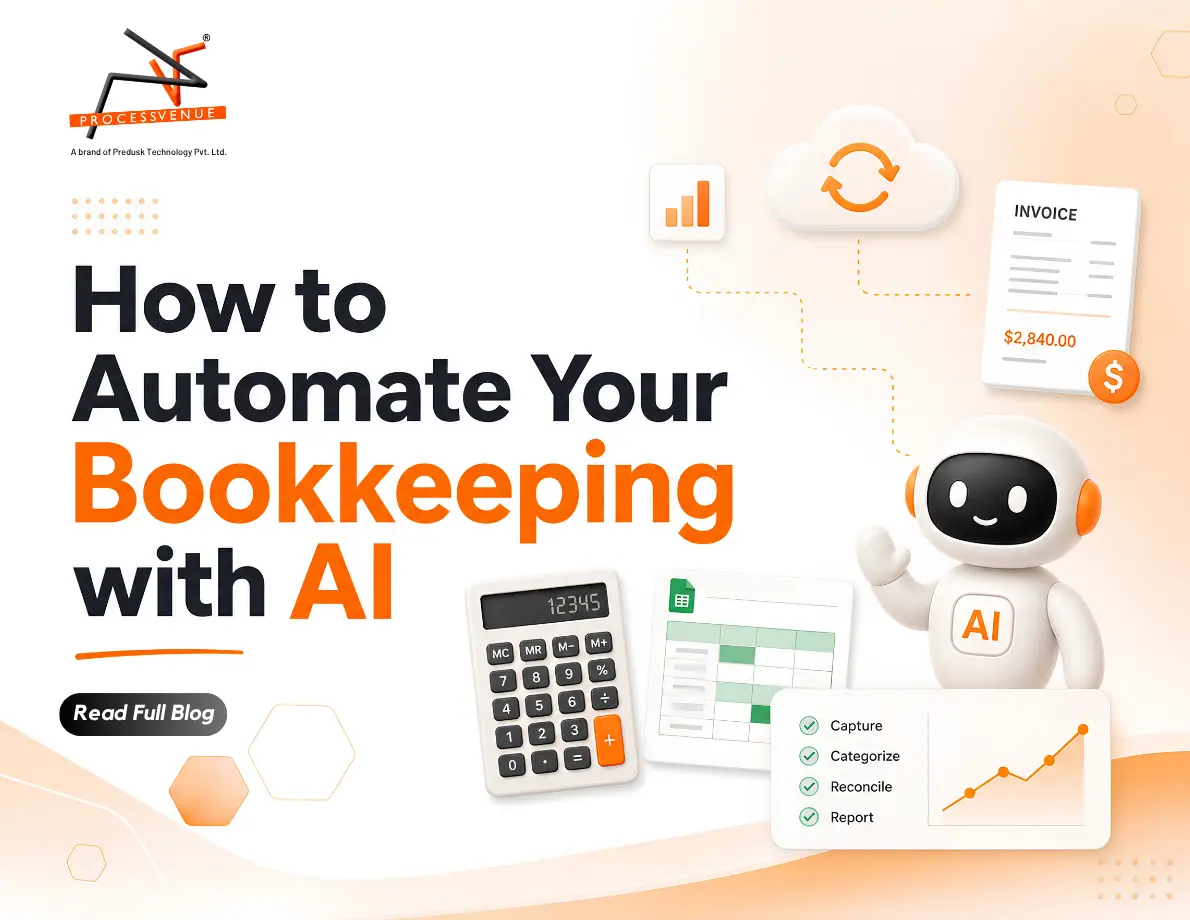
If you identify with this situation then here’s something simple but powerful: automation can take away the pain of bookkeeping, without taking away control. And today, thanks to AI driven automated bookkeeping, that idea isn’t just for big corporations – it’s accessible to every small and mid-sized business owner.
What Does “Automated Bookkeeping” Actually Mean?
Let’s make this simple. Automated bookkeeping doesn’t mean anonymous AI robots taking over your accounting team. It means using smart tools that learn from your financial data to help you record, reconcile, and review faster with fewer errors.
Imagine an assistant that can:
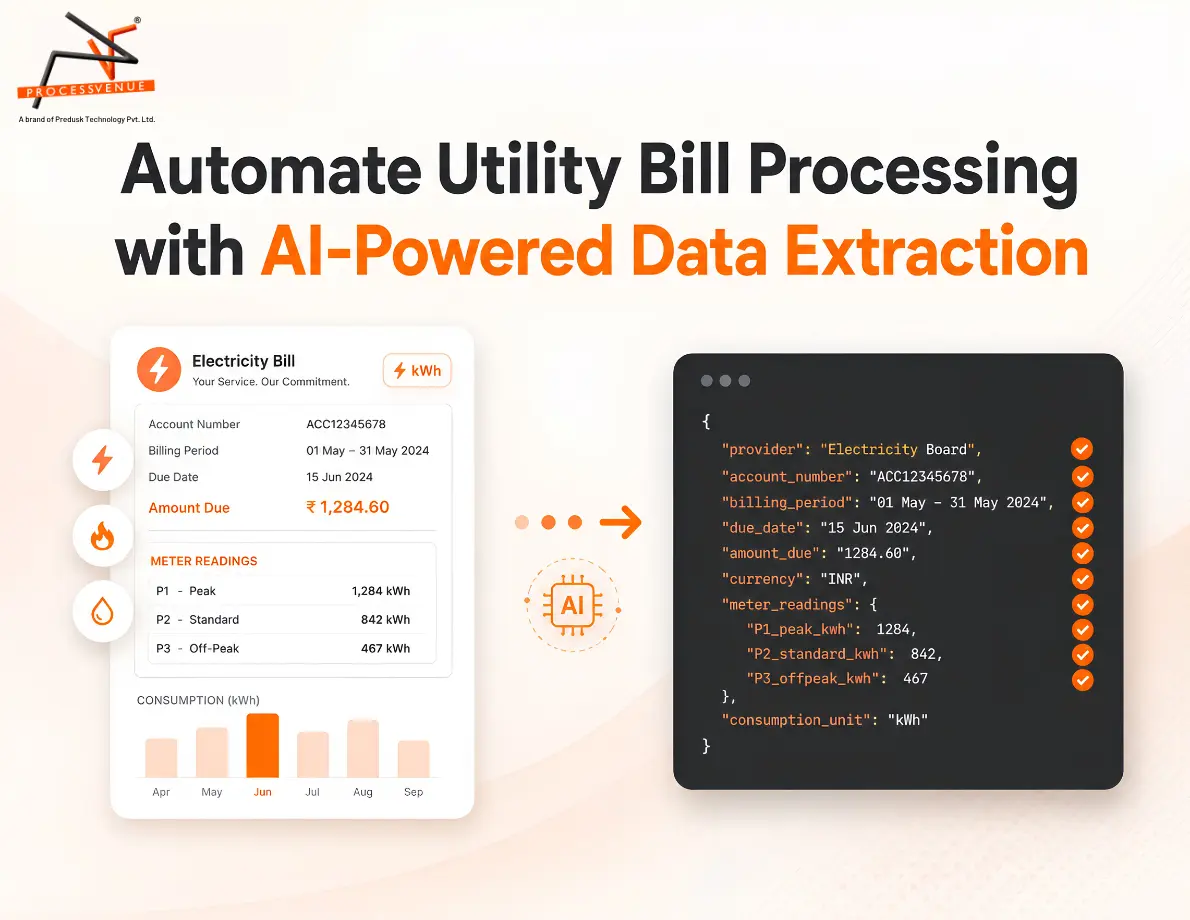
- Read and extract details from your invoices
- Categorize expenses automatically (travel, raw materials, utilities, etc.)
- Match transactions with your bank records
- Generate summary reports instantly
That’s Automated bookkeeping in action. It’s like an extra pair of eyes that never gets tired or misses a decimal.
Why Small Businesses Should Care
If you run a growing business today, the pattern is familiar- there’s always too much paperwork, but too little time. You mostly rely on one or two people to manage everything: billing, reconciliations, tax filings, vendor payments, and audits. And when something breaks, it often takes days to trace and fix. Does this seem familiar?
Here’s how automated bookkeeping helps:
- It cuts down repetitive manual work by up to 70%
- It reduces human errors that cost small firms thousands every quarter
- It provides real-time cashflow visibility, so you never get surprised at month-end
A Mumbai-based food distributor recently shared with us that after automating invoice entry, they saved almost 10 hours a week and caught duplicate vendor payments worth ₹180,000 in the first month. That’s not futuristic, it’s happening right now. Imagine its impact on the distributor’s business.
How AI Changes the Game
There are four areas where AI brings real, measurable change to automated bookkeeping:
-
Automated Data Capture
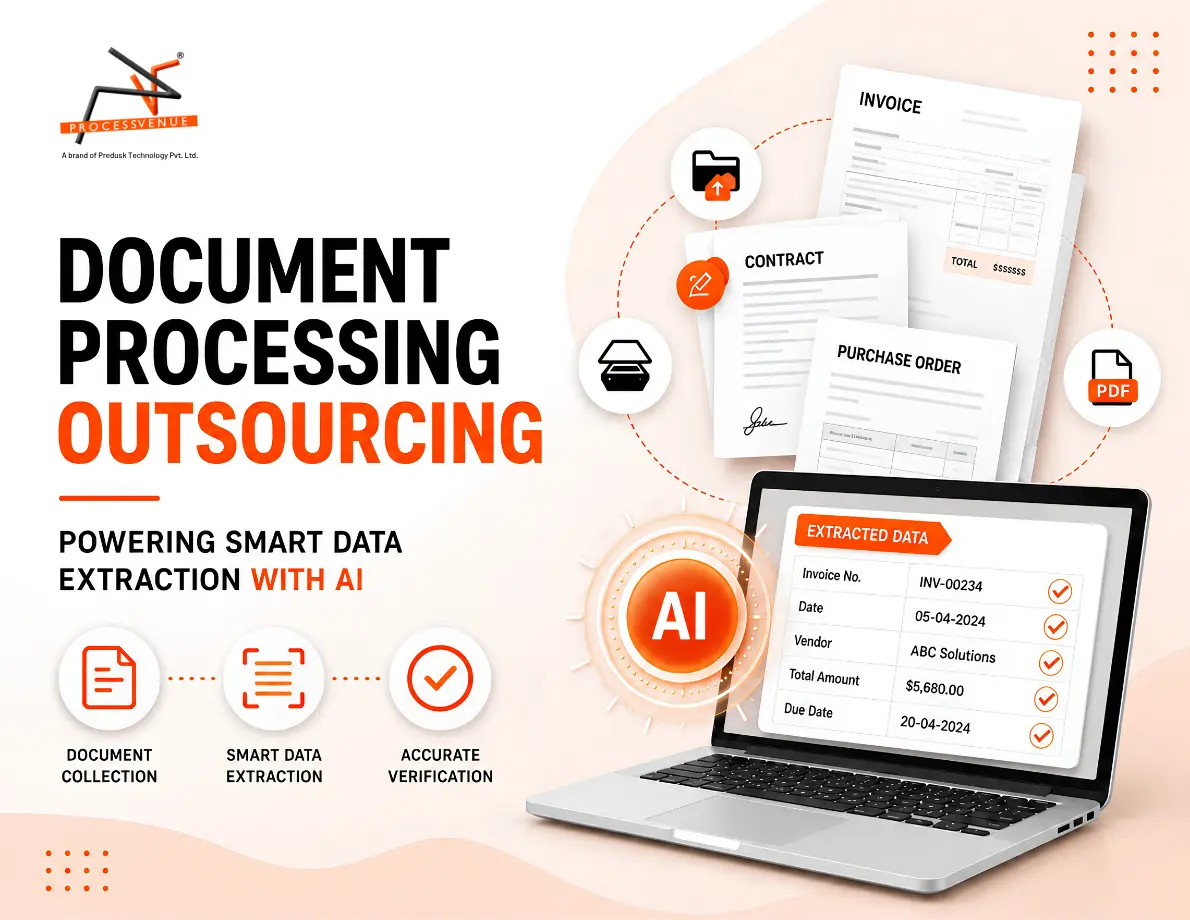
Bye bye to manual typing. AI tools read invoices, receipts, and PDFs automatically.
For example, an AI engine can extract vendor names, invoice amounts, and dates, all within seconds. Tools like Zoho Books, Tally Prime with AI extensions, and QuickBooks Online already offer this.
-
Smart Reconciliation
AI can instantly match transactions between your accounting software and your bank feeds. If there’s a mismatch, it flags the anomaly before it becomes a headache at audit time.
-
Expense Categorization
Forget guessing which line item goes where. AI learns your patterns and auto-tags transactions accurately, whether it’s marketing expenses or raw materials.
-
Predictive Insights
AI doesn’t just record; it analyzes. You get alerts when supplier costs rise, payment cycles delay, or cashflow tightens. One of our SME clients in Pune spotted a recurring expense leak that was costing them ₹50,000 per quarter, something they hadn’t noticed for months.
The Human + AI Balance
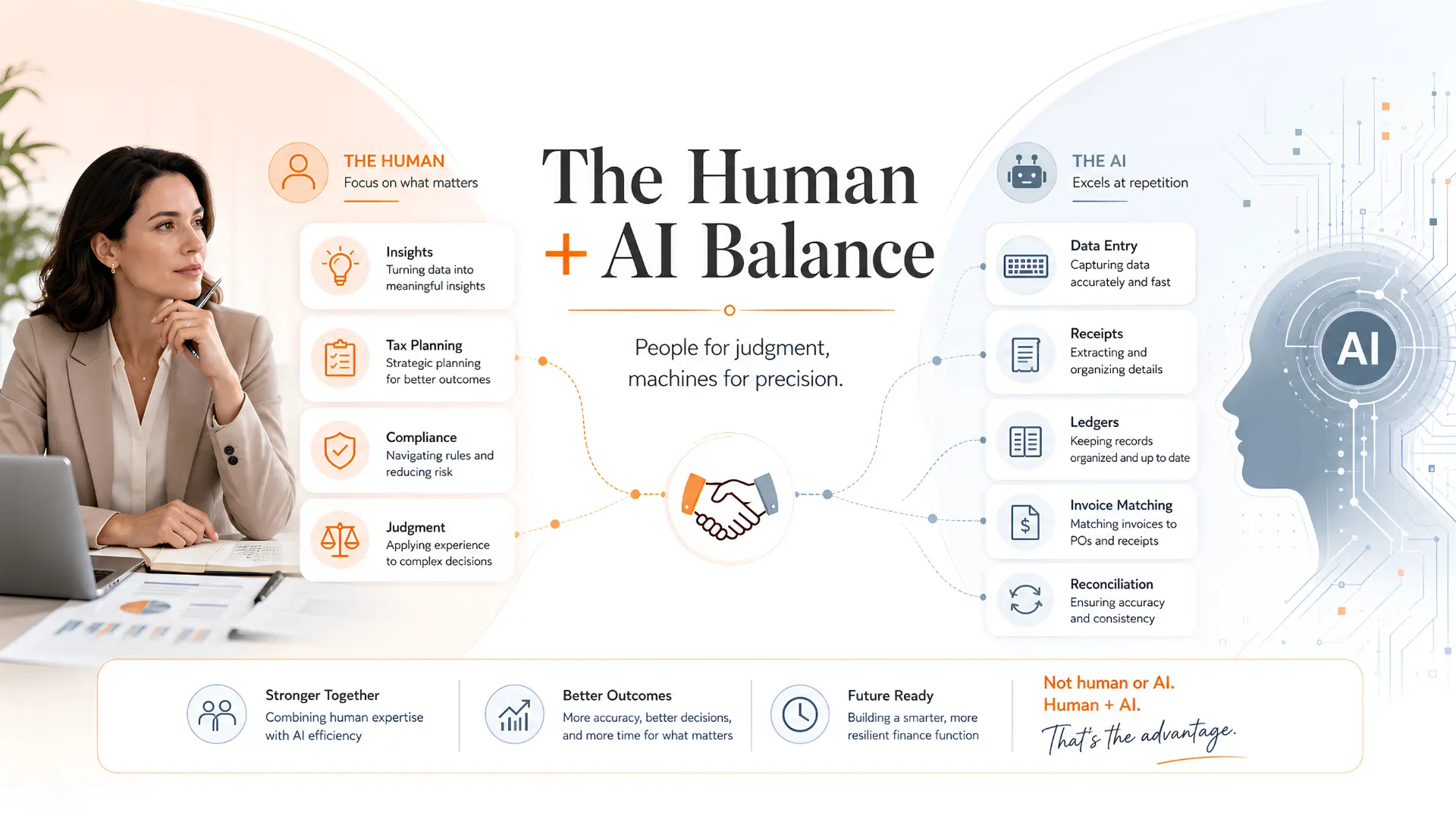
Now, let’s address a common fear: “Will AI replace my accountant?”
Not at all. Your accountant doesn’t become irrelevant, but they become more valuable.
AI handles the repetitive work, so your finance team can focus on insights, tax planning, and compliance. It’s the perfect example of the Human + AI model – people for judgment, machines for precision.
At Processvenue, we see this every day. Our teams combine automation tools with expert human review. The result is cleaner books, faster closings, and fewer last-minute errors before audits. That’s automated bookkeeping in action.
ProcessVenue’s View: Making AI Work for Every Business
At Processvenue, we’ve helped companies of every size from a 20-person export firm in Jaipur to a digital marketing agency in Mumbai to modernize their finance operations without hiring extra staff.
Here’s how we make it work:
- Our Financial & Accounting Services use AI tools to extract data from invoices, reconcile accounts, and prepare reports automatically.
- Our AI and Machine Learning solutions customize automation to your workflow, not the other way around.
- And our Backoffice Services ensure there’s always a human review layer before numbers go final.
The outcome?
Faster closings. Fewer errors. Total visibility.
And best of all, peace of mind for founders who want to focus on growth, not paperwork.
The Measurable Benefits
When small businesses automate bookkeeping with AI, they see results quickly:
- 50–70% reduction in time spent on manual data entry
- 30–40% fewer accounting errors
- Faster month-end closing cycles (from 10 days to as low as 3–4)
- Better compliance readiness with audit-friendly reports
- More confidence in decision-making because your numbers are always up to date
In short, automation turns bookkeeping from a back-office chore into a business advantage.
Closing Thoughts
If you’ve ever lost a Sunday to balancing your books, it’s time to let technology take over the heavy lifting. Automated bookkeeping isn’t about replacing people – it’s about empowering small business owners to grow without chaos, with the power of AI.
Automation doesn’t just make finance easier, it makes businesses stronger, smarter, and future-ready.