
 sahil wadhwa
  July 1, 2026
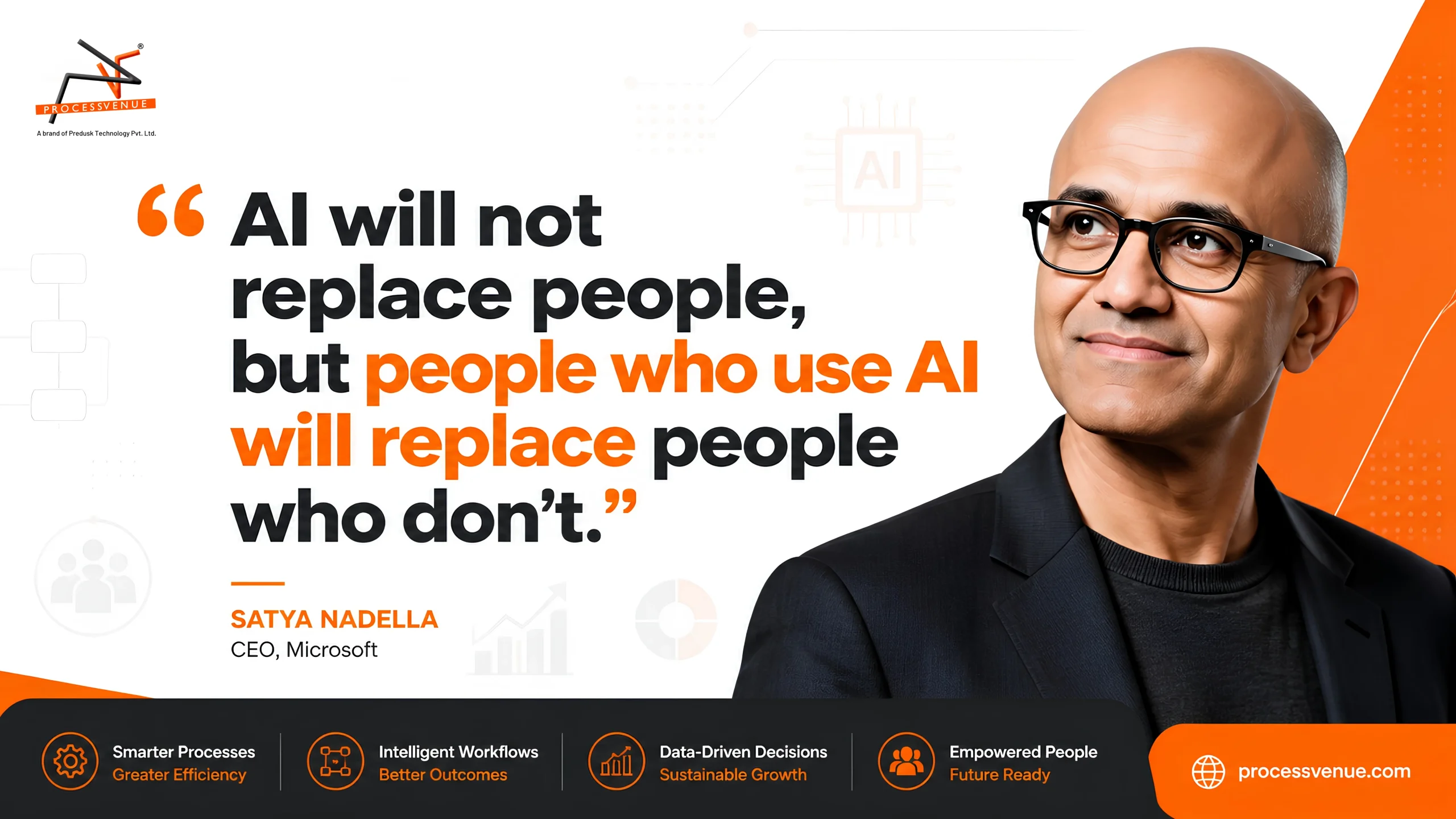
Satya Nadella once said, “AI will not replace people, but people who use AI will replace people who don’t.”
I have spent enough time around enterprise clients and ops teams to know this: no matter how advanced the technology, nothing triggers anxiety in the C-suite like the phrase “fully automated.” This is especially true when it comes to business-critical processes where quality, nuance, and judgment matter.
Popular literature almost tempts you into thinking that AI is a magic wand. It’s not. As a recent McKinsey report pointed out, most AI implementations fail to scale or deliver ROI because the excitement of the pilot phase doesn’t translate into reliable, repeatable, and scalable processes.
We are in the middle of a global tsunami – a rush to automate business processes. AI is being hailed as the cure-all for key business challenges. But let’s be clear: while AI can do a lot, it cannot be left alone.
The real risks of full Business Automation
I remember a quote I read a few days back from Sundar Pichai’s interview where he said, “AI is too important not to be regulated.”; I would add to it that AI’s also too important not to be supervised.
Full business automation without the requisite human oversight can create four blind spots:
-
Control Loss → Amazon’s Hiring Algorithm
Scenario:
Amazon developed an AI hiring tool to automate resume screening. The algorithm started downgrading resumes with the word “women’s” (e.g. “women’s chess club captain”), because it had trained on 10 years of resumes submitted to the company, most of which came from men.
Insight:
The model’s decision logic became opaque over time. Once deployed at scale, it was difficult to “correct” or intervene without starting from scratch. Amazon eventually scrapped the tool.
-
Bias at Scale → Apple Card Credit Limits Controversy
Scenario:
In 2019, customers (including tech entrepreneur David Heinemeier Hansson) reported that Apple Card, issued by Goldman Sachs, was offering significantly lower credit limits to women compared to men, even if they had better credit scores.
Insight:
The AI model had embedded gender bias from historical data. Since the process was automated, this bias scaled invisibly.
-
Regulatory Exposure → Robo-Advisors in Financial Services
Scenario:
Robo-advisors automate financial advice and investment decisions. But in 2021, the SEC fined two firms, Betterment and Wealthfront, for non-compliance issues related to automated portfolio rebalancing and misstatements about how the algorithms worked.
Insight:
Even in highly automated fintech models, human oversight is required to ensure compliance with evolving regulations. When oversight fails, the financial and reputational costs are high.
-
Customer Trust Erosion → Air Canada Chatbot Legal Ruling (2024)
Scenario:
Air Canada was forced to honor a discount that its AI chatbot incorrectly promised a customer. A court ruled that even if the chatbot made a mistake, the airline was accountable for the misinformation.
Insight:
Customers expect human-like accountability, even from automated agents. The ruling showed that delegating too much customer interaction to bots; without a fail-safe human review can damage trust and lead to legal consequences.
Human Oversight in AI makes it efficient
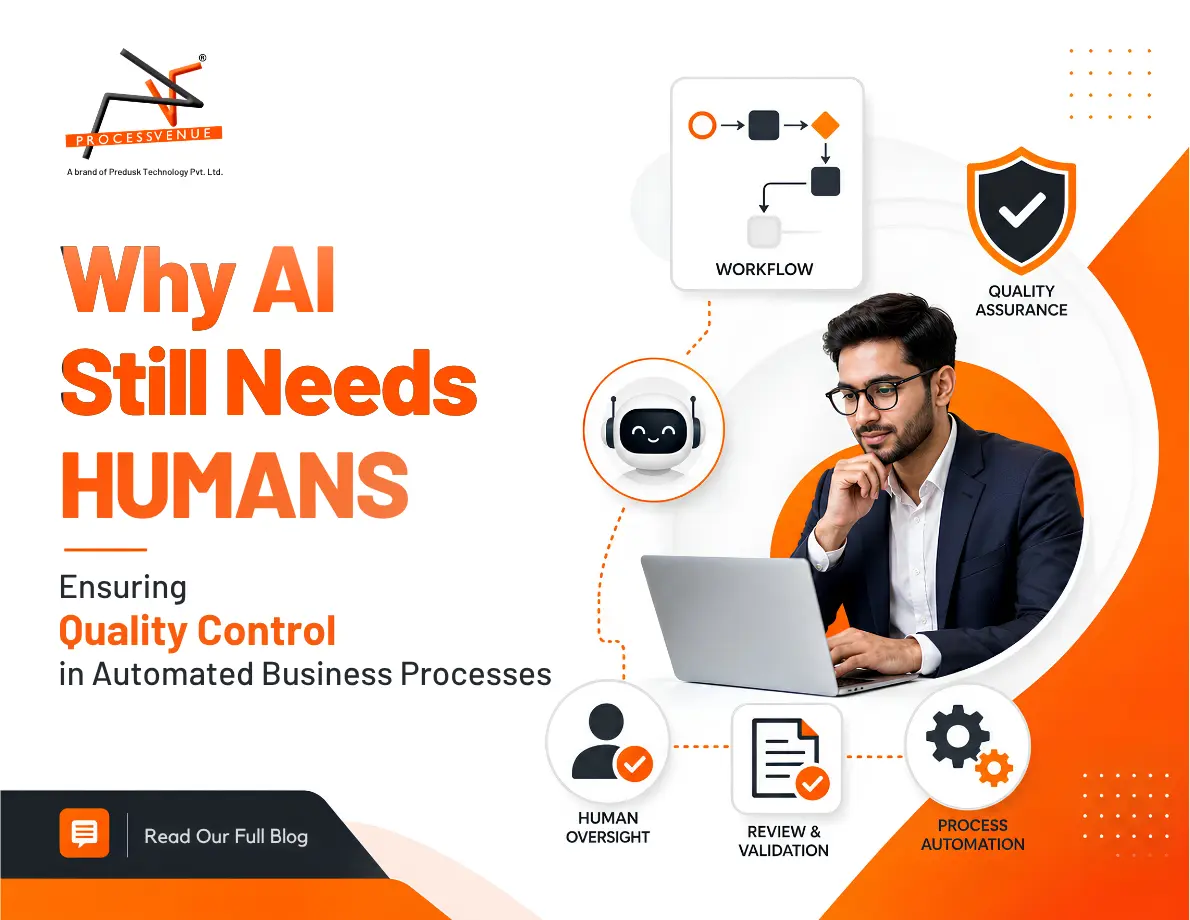
For AI to work well, humans must be in the system – not removed from it. This is achievable in the form of human-in-the-loop (HITL) systems – setups where machines and humans work together, not in competition, but in tandem.
There are 3 broad process categories where AI needs that human layer:
- Emotionally nuanced tasks – Think customer complaint handling. AI can detect sentiment, but it cannot always decipher sarcasm, fear, or cultural undertones. If a customer writes, “I guess I expected too much,” will your bot escalate that or send a cheery “Thanks for your feedback” reply?
- Creative review and judgment – Whether it’s a marketing copy, financial commentary or UX feedback, generative AI is great for first drafts. But you still need a human to apply domain expertise, contextual knowledge, and tone alignment.
- Ethical, legal, and reputational decisions – Compliance reviews, KYC processes, hiring filters — these are all areas where AI can introduce bias. And once you automate bias at scale, the fallout can be massive.
Human-in-the-Loop (HITL) in Action
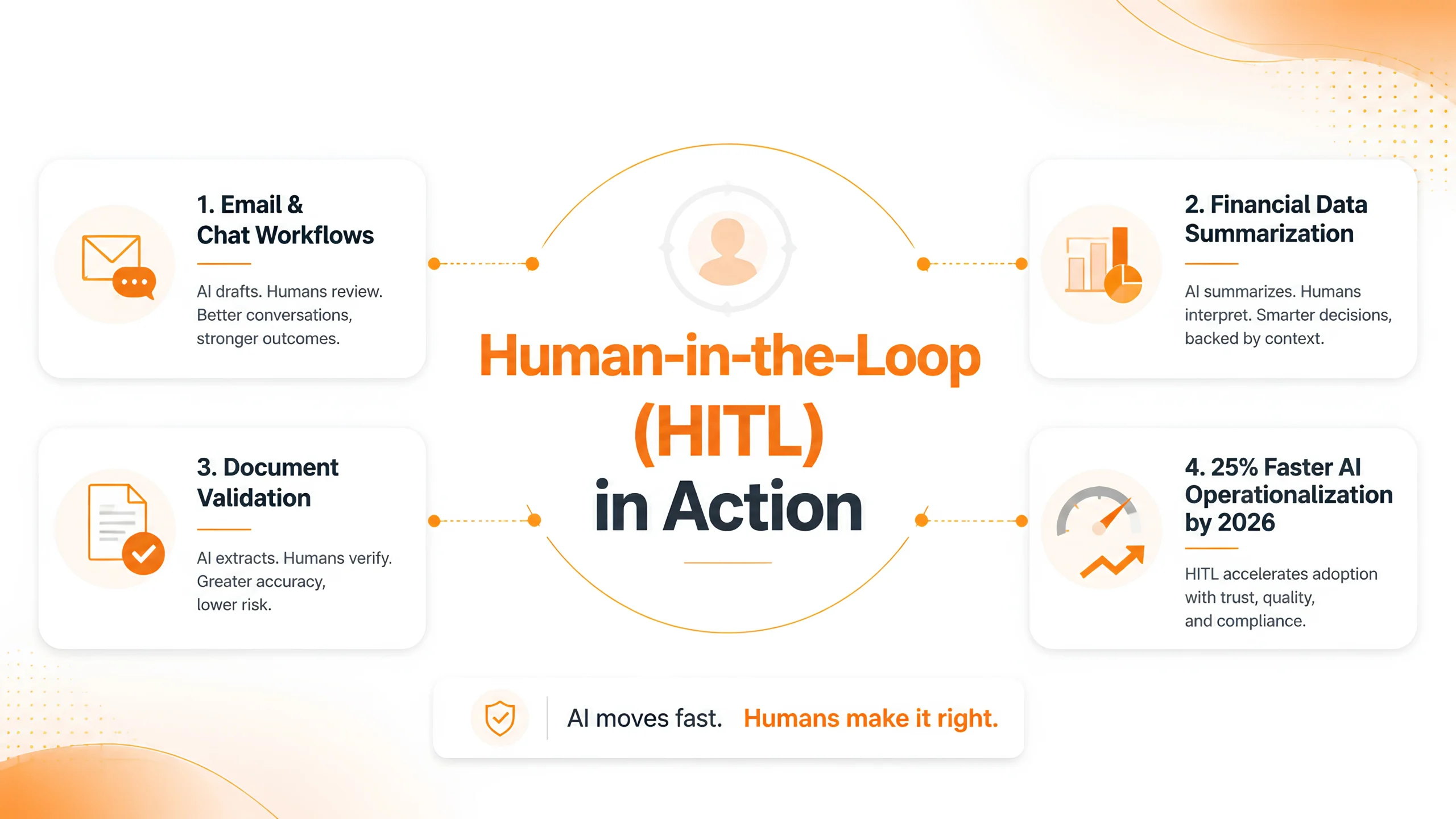
Let’s look at where HITL adds tangible value:
- Email & Chat Workflows: AI drafts a response based on historical interactions. A human reviews and tailors it for nuance, customer type or priority level. This is happening in real-time at companies like Freshworks and Intercom.
- Financial Data Summarization: AI aggregates and summarizes transaction patterns. A finance analyst interprets anomalies, adds narrative insights, and flags inconsistencies. BlackRock and JPMorgan use similar models in their advisory arms.
- Document Validation: AI scans vendor contracts or insurance claims. Human agents validate exceptions, add comments, or approve borderline cases.
Gartner found that organizations adopting adaptive AI systems, where humans remain “in the loop “will outperform peers in time to operationalize AI by 25% by 2026. This supports a strong business case for HITL frameworks as a foundation for responsible AI integration.
What’s the path going forward?
ProcessVenue’s own view is this: Deploy AI selectively, prove ROI conclusively.
We believe in AI for augmentation, not replacement. Our delivery models integrate automation with human review layers – especially for judgment-heavy workflows. For instance:
- In customer support, AI sorts and routes tickets, but senior agents validate escalations.
- In data operations, AI pulls trends, but human analysts deliver the final insights to clients.
- In recruitment outsourcing, AI does the first scan, but humans do the interview prep and cultural fit analysis.
This hybrid approach means fewer errors, faster turnaround, and smarter decision-making.
Final Word
Without human oversight in AI, it’s a half-built bridge. Businesses that find the right balance – automation for speed, humans for quality, will emerge leaner, sharper, and more trusted.
Reach out to us at ProcessVenue to implement Human-Augmented AI solutions in your backoffice workflows, and experience the transformative benefits firsthand!