
 sahil wadhwa
  July 14, 2026
Content of blog
Recently, I was at an industry event when during the conversation one logistics COO told me, “Strangely, we aren’t losing customers because of failed deliveries, in fact we’re losing them because we can’t respond fast enough.”
My little conversation with the COO felt like a first-hand validation of what I had been reading in industry reports, and hearing from some of my clients. For many executives, customer support has become their biggest operational headache. Not because they don’t care about their customers, but because delivery exceptions, tracking delays, RTO spikes, and season-time surges were overwhelming their in-house teams.
Need for Outsourced Customer Support services
If operations are the lifeblood of a logistics company, then the support desk is the heartbeat. It keeps customers reassured when shipments are late during high-demand festive seasons, addresses payment issues, resolves questions in multiple languages, and intervenes when packages are damaged or missing. Maintaining that heartbeat 24/7 is expensive and labour-intensive for any in-house team. This necessitates Outsourcing.
Outsourcing customer support services doesn’t mean losing control; it means tapping into dedicated specialized resources so your in-house team can breathe easy and focus on building customer relationships.
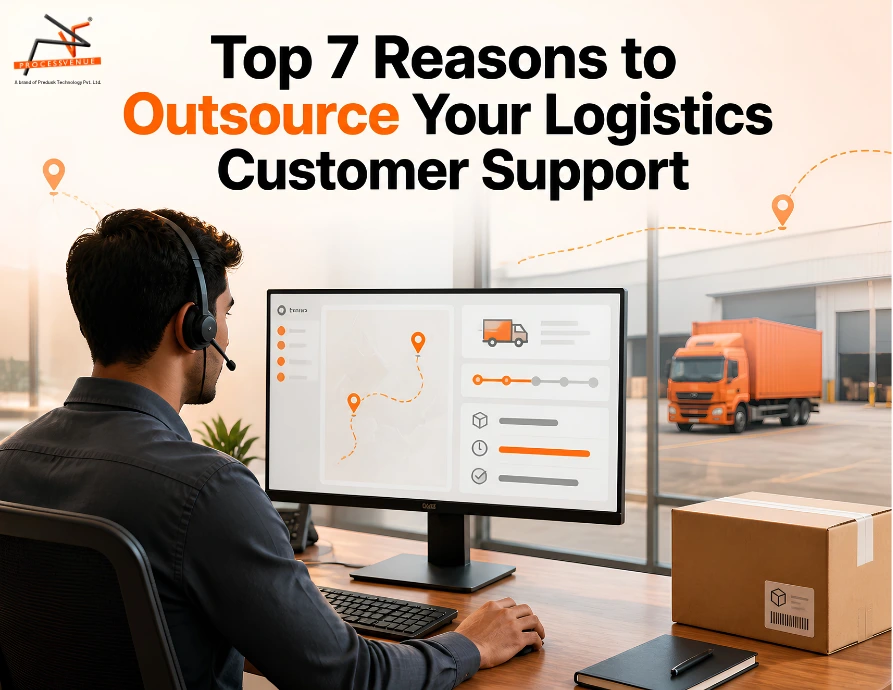
Here are top 7 reasons why you should consider outsourcing logistics customer support:
Meeting Customer Expectations
Modern logistics customers expect immediacy. They want to know where their shipment is, when it will arrive, and what to do if something goes wrong. Keeping an in‑house team available around the clock is expensive.
- Always-on support: Festive seasons or flash sales often double or triple ticket volumes. Outsourcing partners maintain sufficient staffing to handle surges without burning out your core team.
- Multilingual capability: Operating across India means addressing queries in multiple languages like Hindi, Marathi, Tamil, English, and others. A global customer base adds more languages to this mix. Outsourced teams specialize in multi‑language support, ensuring customers feel heard and understood.
- Proactive communication: Good providers send automated tracking notifications and status updates via SMS, email, or in-app messaging, cutting down incoming calls.
Operational Agility
Logistics is cyclical. Weekdays are moderate, weekends spike, and national holidays can be chaotic. Outsourcing gives you the ability to scale your support team on demand.
- Scalability for seasonal spikes: Outsourcing partners add agents quickly for Diwali, Christmas, or Black Friday surges and scale back afterward, keeping your costs variable instead of fixed.
- Access to specialized expertise: Logistics support is more than answering the phone. Agents need to understand process frameworks, operate supply chain software, maintain documentation, and enable last mile routing. Outsourcing firms invest in training their teams on these systems, so you don’t have to.
Financial and Strategic Benefits
One of the biggest misconceptions about outsourcing is that it’s only about cost cutting. While saving money is part of it, the real benefit comes from reallocating resources to growth.
- Lower operational expenses: You avoid recruiting, training, and retaining a large support staff. Outsourcing converts fixed labour costs into variable costs.
- Focus on core growth: By delegating support to a partner, your operations team can invest more time in route optimization, warehouse automation, and strategic partnerships.
Human + AI: The Future of Logistics Customer Support Services
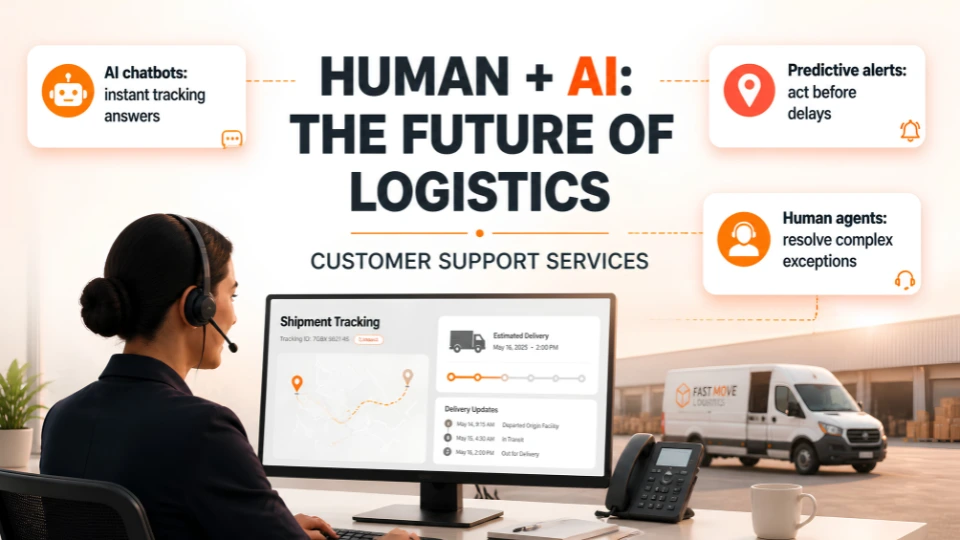
The misconception that outsourcing will make support impersonal or robotic is outdated. The best providers combine AI tools with empathetic human agents. At Processvenue, we believe in the Human + AI model: machines handle repetitive tasks, while humans apply judgment and empathy. This philosophy originates from our finance automation practice, where we’ve found that AI drastically reduces time spent on manual data entry and helps catch errors early.
In logistics support, this translates to:
- AI chatbots for routine queries: Where is my package? When will it arrive? What does this tracking status mean? Bots answer these instantly.
- Predictive alerts: AI can flag potential delays based on route data and weather, allowing agents to proactively inform customers.
- Human agents for exceptions: Damaged goods, wrong addresses, customs holds, or sensitive issues require empathy and problem-solving, tasks humans excel at
By blending AI with human expertise, support teams resolve more inquiries on first contact and free up resources to handle complex issues.
ProcessVenue’s Approach to Logistics Customer Support
At ProcessVenue, we tailor our services to the unique needs of logistics and transportation clients. We’ve designed support operations that are efficient, secure, scalable, and most importantly Human+AI enabled.
- Customer Support Services: Agents are trained on multilingual support on your tracking systems for your specific workflows, whether you’re a courier, a cross border 3PL, or an ecommerce fulfilment centre.
- AI & Machine Learning Solutions: Our AI layer handles high‑volume queries like tracking updates, delivery ETAs, and frequently asked questions while routing complex issues to humans.
- BackOffice and Compliance: Data security is non-negotiable. We adhere to ISO 27001 and SOC 2 standards to safeguard sensitive shipment and customer information.
Lessons from Real Businesses
I want to share with you my first-hand experience with some clients that we worked with at ProcessVenue.
A Bengaluru based hyperlocal delivery startup was drowning in weekend order inquiries. Their small inhouse team couldn’t keep up, leading to poor ratings on the App Store. After outsourcing their support, their average resolution times dropped from 10 hours to just 2 hours.
We introduced a Human + AI approach with automated responses to common questions and escalated complex issues to well‑trained agents. Customer ratings improved, and the startup’s founders could focus on building their merchant network instead of fielding calls.
A U.S. third-party logistics (3PL) provider faced challenges managing customer queries about cross border shipments. Their inhouse team lacked expertise in customs regulations and time zone flexibility.
They outsourced their support to our team in India, which handled customs paperwork questions and provided 24/7 coverage. Within the first quarter, they saw a 25% reduction in shipment delays due to customer paperwork errors and saved approximately 40% on support costs compared with expanding the in‑house team.
Readiness Checklist: Is It Time to Outsource?
Having talked about the need to outsource logistics, it’s equally true that not every logistics firm needs to outsource immediately. Here’s a quick self assessment to help you decide:
- Backlog of queries: Are customer issues piling up faster than your team can resolve them?
- After‑hours coverage: Do you regularly miss calls or chats after business hours?
- High support costs: Are support expenses eating into your margins when they could be variable instead of fixed?
- Expertise gaps: Are your agents struggling with specialized questions about customs, returns, or international shipping?
- Slow growth: Is the time spent on support taking away from route optimization, marketing, or network expansion?
If you checked two or more, it’s worth exploring outsourcing.
If you’re ready to move from firefighting to the futureproofing your way to happier customers and a stronger business, then let’s talk to see how the Processvenue team can help you.