
 sahil wadhwa
  August 11, 2026
Content of blog
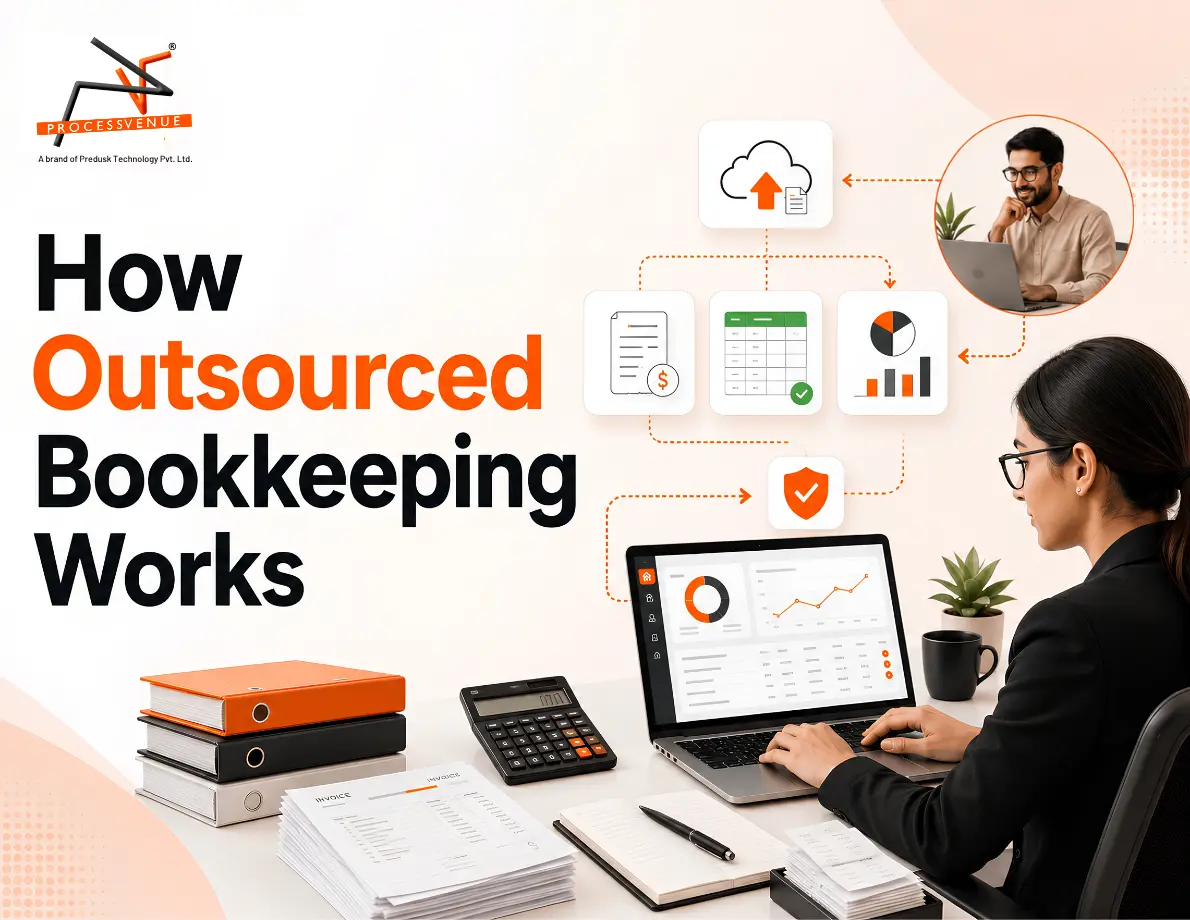
On any given day, a growing business generates hundreds of financial data points-sales invoices, vendor bills, employee expenses, bank transactions, tax entries. Each of these pass through multiple hands and systems before they finally show up as a “number” on a report.
Interestingly, when this money flow works, business executives rarely think about bookkeeping. However, when it doesn’t, they feel it everywhere from delayed decisions to uncomfortable surprises at month-end.
Understanding how outsourced bookkeeping works today starts by understanding this journey of financial data and where it usually breaks down.
What Most People Think Outsourced Bookkeeping Is (And Why That’s Outdated)
For a long time, outsourced bookkeeping was seen as a simple cost-saving move. You handed over invoices. Someone entered data. At the end of the month, you received a set of books.
That model worked when businesses were simpler and decision cycles were slower. But today, it struggles for three reasons:
- Most businesses operate in near real time
- Compliance requirements are tighter and stricter
- Founders and CXOs need data they can trust, not just files with manicured numbers
The problem isn’t that bookkeeping is being done. The problem is that it’s often being done in isolation from how the business runs. That’s why modern businesses need to rethink how they outsource bookkeeping services.
What Outsourced Bookkeeping Really Means in 2026
Outsourced bookkeeping today is not about delegating data entry. It’s about outsourcing ownership of financial data hygiene, accuracy, and readiness, so that internal teams and leaders can focus on running the business.
When you outsource bookkeeping services to a modern partner, you’re not hiring a remote bookkeeper. You’re plugging into a managed workflow that combines:
- Technology for speed and scale
- Human expertise for judgment and control
- Clear accountability for outcomes
This shift-from task execution to outcome ownership is what separates traditional outsourcing from how outsourced bookkeeping works today.
Step-by-Step: How Outsourced Bookkeeping Works in Practice
Let’s break this down simply.
Step 1: Business Understanding and Tool Mapping
Every engagement starts with understanding how the business operates. This includes:
- Industry and transaction complexity
- Volumes and seasonality
- Compliance requirements (GST, TDS, audits)
- Existing tools-Tally, Zoho, QuickBooks, ERPs, banking platforms
This step ensures bookkeeping fits the business, not the other way around.
Step 2: Data Ingestion and Clean-Up
Financial data flows in from multiple sources:
- Sales and purchase invoices
- Bank statements
- Expense reports
- Tax portals
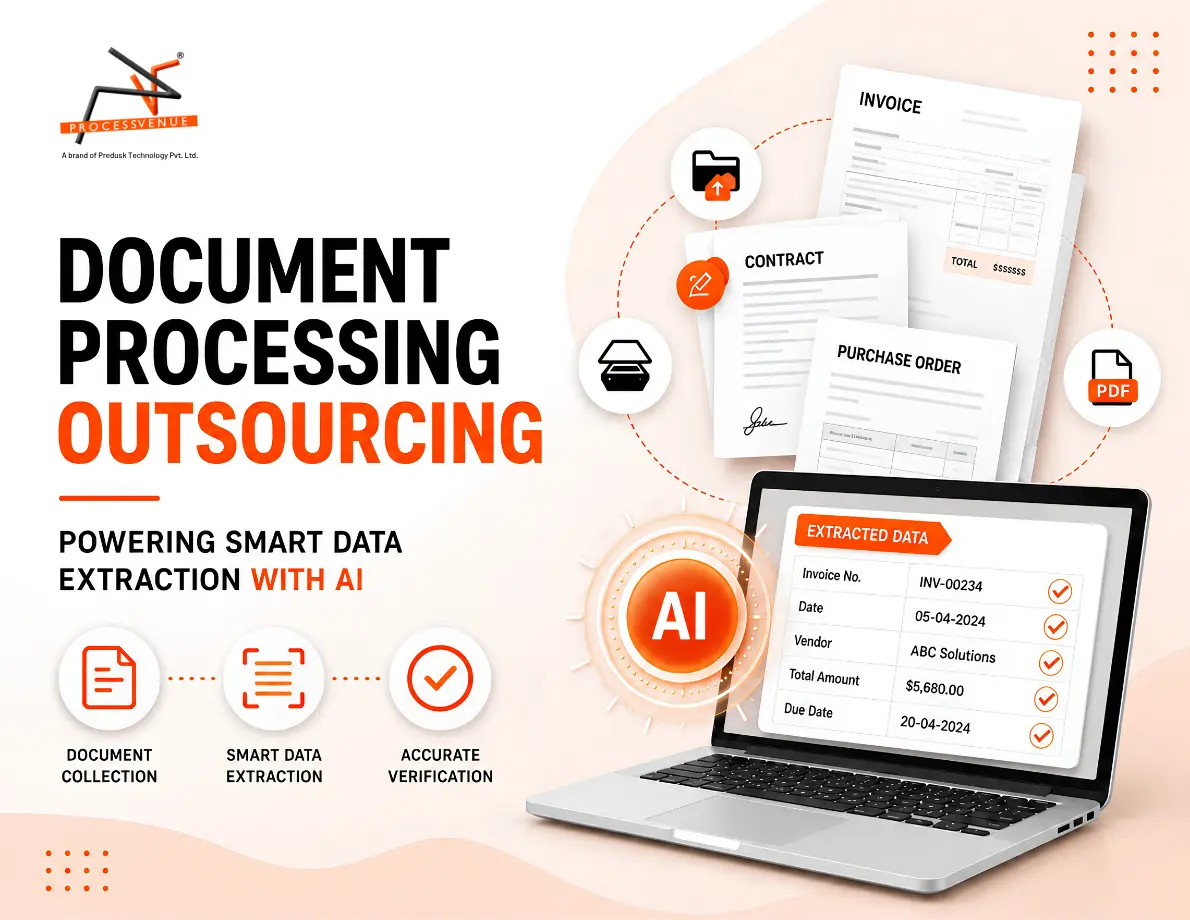
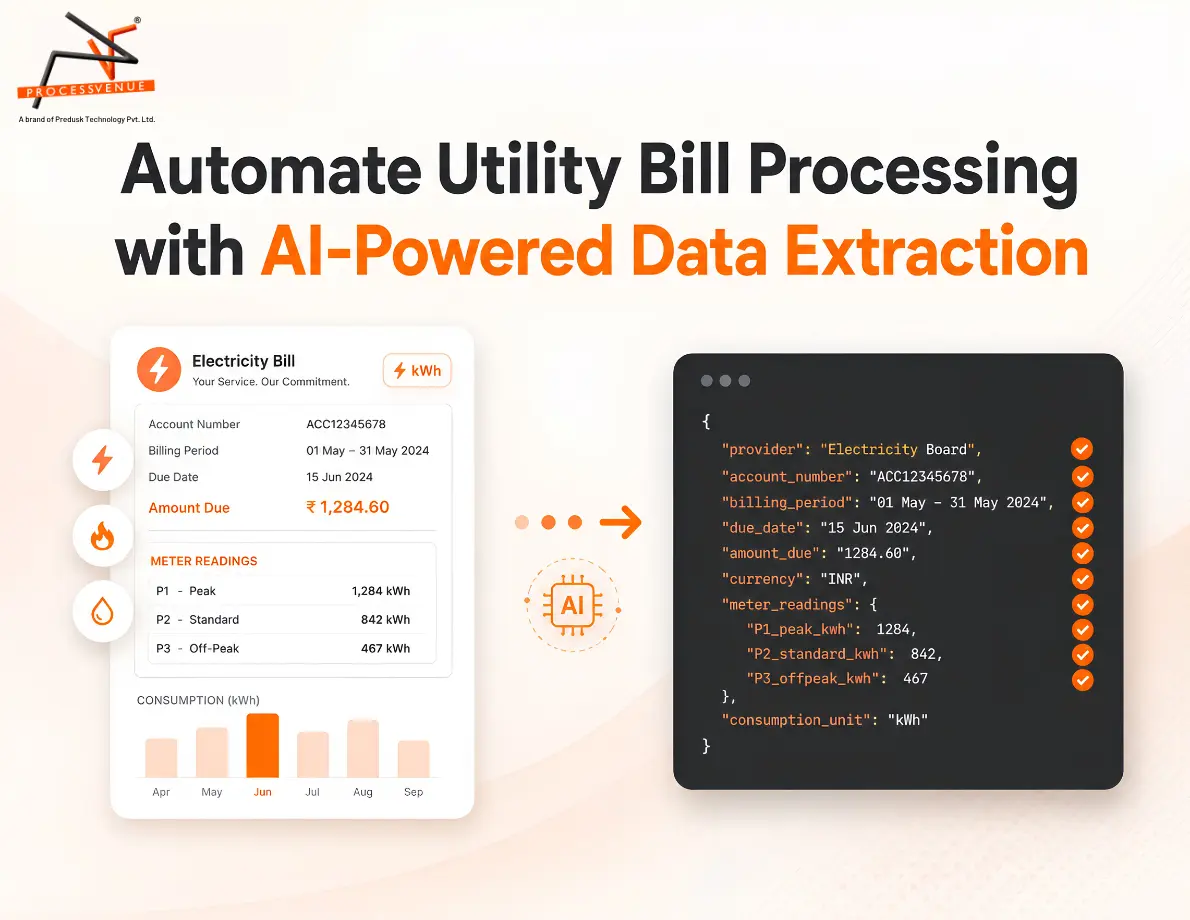
AI tools help extract and organise this data quickly. Human reviewers validate, correct, and classify it properly. Let’s look at it this way: Speed without accuracy creates risk. Accuracy without speed creates delays. The balance matters.
Step 3: Day-to-Day Bookkeeping Operations
This is where consistency is built. The discipline of bookkeeping keeps a business robust and transparent.
- Transaction entries
- Categorisation
- Bank and ledger reconciliations
- Handling exceptions and anomalies
In a well-run outsourced bookkeeping setup, this happens daily or weekly and not just at month-end, so issues don’t pile up silently.
Step 4: Review, Controls, and Quality Checks
Strong controls are non-negotiable. A proper maker-checker model ensures:
- Errors are caught early
- Audit trails are maintained
- Compliance gaps don’t slip through
This is one of the biggest advantages of outsourcing bookkeeping services to a managed team rather than relying on a single in-house resource.
Step 5: Reporting That Leaders Can Actually Use
Good bookkeeping doesn’t end with balanced books. It produces reports that answer real questions:
- Where is cash going?
- What do margins look like right now?
- Are we compliant-or exposed?
The goal is clarity, not just completion. An effective bookkeeping outsourcing partner provides both.
Where AI Fits In, and Where Humans Still Matter
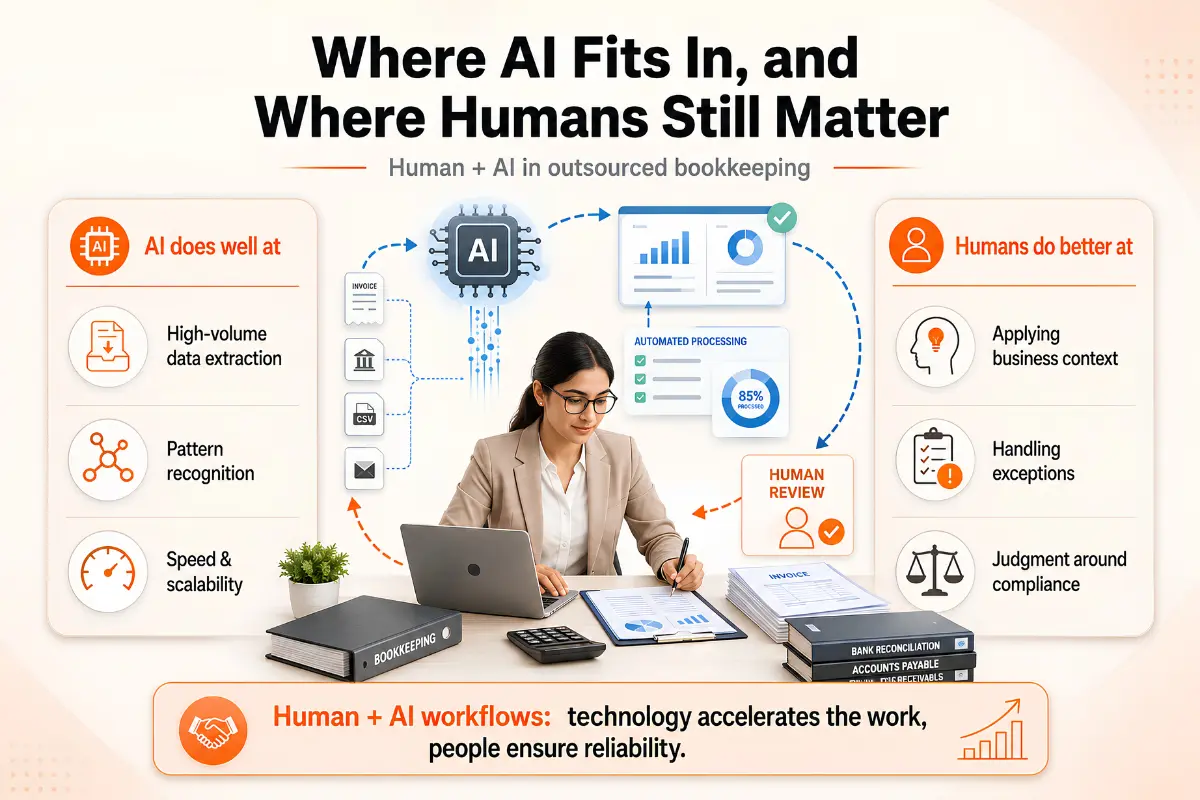
AI has transformed outsourced bookkeeping; not by replacing people but by augmenting them. AI does well at:
- High-volume data extraction
- Pattern recognition
- Speed and scalability
Humans do better at:
- Applying business context
- Handling exceptions
- Exercising judgment around compliance
The most effective outsourced bookkeeping models use Human + AI workflows, where technology accelerates work and people ensure reliability.
What You Gain by Outsourcing Bookkeeping (Beyond Cost)
Cost savings are real, however, to be frank, they’re rarely the biggest benefit anymore. Businesses that outsource bookkeeping services effectively gain:
- Faster and more predictable month-end closes
- Better visibility into cash flow and liabilities
- Reduced dependence on one individual
- Fewer compliance surprises
- The ability to scale operations without scaling chaos
In other words, bookkeeping stops being a bottleneck and starts becoming a foundation of your business.
Is Outsourced Bookkeeping Right for Your Business?
Outsourced bookkeeping works especially well for:
- Growing SMEs with rising transaction volumes
- Businesses operating across locations or entities
- Companies with compliance-heavy operations
- Founders who want visibility without micromanagement
Very early-stage businesses with minimal activity may not need it yet. But once complexity creeps in, structure becomes essential.
How ProcessVenue Approaches Outsourced Bookkeeping
At ProcessVenue, we see outsourced bookkeeping as a managed service and not as staff augmentation. Our approach focuses on:
- Secure, compliant processes
- India-based managed teams
- AI-ready workflows
- Clear accountability for accuracy and timelines
The objective is simple: help businesses rely on their numbers, not wrestle with them.
A Quick, Indicative Example
Here’s a quick example.
We recently worked with a fast-growing services company dealing with inconsistent books across multiple tools. By restructuring their outsourced bookkeeping workflow by combining AI-based data extraction with human reviews, we helped them shorten their close cycle by 30% and significantly improve confidence in their numbers.
The biggest change wasn’t speed. It was trust they began having in their own numbers. Their leadership team stopped questioning the data and started using it.
Last thought: From “Maintaining Books” to “Running the Business”
Bookkeeping used to be about maintaining records. Today, it’s about enabling decisions.
When outsourced bookkeeping is done right, it fades into the background-quietly supporting growth, compliance, and confidence. And that’s exactly how it should be.