
 sahil wadhwa
  July 28, 2026
Content of blog
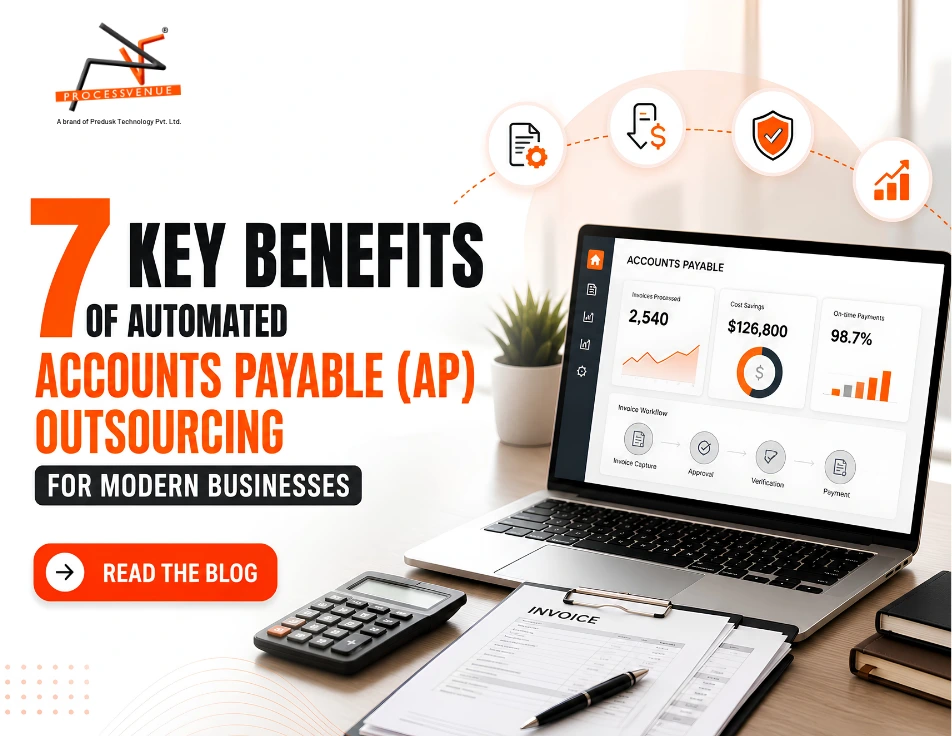
- Here are the 7 most meaningful benefits I’ve seen businesses unlock through this approach.
- Faster Invoice Processing Improves Cashflow Discipline
- Reduced Errors and Duplicate Payments
- Stronger Vendor Relationships Through Predictable Payments
- Improved Compliance and Audit Readiness
- Lower Operational Costs Without Adding Headcount
- Real-Time Visibility Into Spend and Liabilities
- Finance Teams Focus on Strategy, Not Firefighting
For many growing businesses, Accounts Payable sits quietly in the background. Leaders rarely discuss Accounts Payable unless something goes wrong—a vendor escalation, a missed payment, or an audit query that triggers a last-minute scramble.
For SME and mid-sized firms the impact is immediate and everywhere on monthly cashflow, brand credibility and business control.
In today’s environment, where businesses are expected to scale without bloating teams, AP can no longer remain manual and reactive. Automated AP outsourcing has emerged as a practical way to modernize this function, combining technology with human oversight to deliver speed, accuracy, and predictability.
Here are the 7 most meaningful benefits I’ve seen businesses unlock through this approach.
-
Faster Invoice Processing Improves Cashflow Discipline
Delayed invoice processing is one of the most common and most underestimated problems in finance operations. Invoices arrive through multiple channels, sit in inboxes waiting for validation, and often move slowly through approval chains. The result is stretched payment cycles and poor visibility into liabilities.
Automated AP outsourcing shortens this entire journey. Invoices are captured digitally the moment they arrive, key data is extracted automatically and approvals are routed without manual follow-ups. Only exceptions require human attention.
For many manufacturing and services firms, this shift alone has reduced invoice turnaround time from weeks to days. The business impact is significant: predictable outflows, fewer last-minute payments and improved working capital planning.
When invoice flow becomes predictable, cashflow stops being a guessing game.
-
Reduced Errors and Duplicate Payments
Manual AP processes are vulnerable to human errors like duplicate invoices, incorrect amounts, or mismatched vendor details. These mistakes often go unnoticed until audits or vendor disputes bring them in focus, by which time the damage is already done.
Automation introduces consistency and control. Invoices are systematically matched against purchase orders or contracts; duplicates are flagged instantly, and discrepancies are escalated for review. Human oversight focuses on judgment, not data entry.
One of our clients, a mid-sized company, discovered, after automating AP, that a small but recurring percentage of invoices had errors. Correcting these issues not only prevented financial leakage but also improved internal confidence in reporting.
Preventing even a handful of errors can offset the entire cost of automation.
-
Stronger Vendor Relationships Through Predictable Payments
Vendors rarely complain about payment amounts; they complain about uncertainty. When payments are delayed or communication is unclear, relationships suffer, regardless of intent.
Automated AP outsourcing brings transparency and reliability into vendor interactions. Invoices are acknowledged promptly, approval stages are clear, and payments follow predictable timelines. Vendors spend less time chasing finance teams and more time focusing on delivery.
Several SMEs have witnessed a subtle but important shift after modernizing AP: vendors became more cooperative, more flexible during tight cycles, and more willing to prioritize orders.
AP is not just a finance function – it’s a trust-building mechanism.
-
Improved Compliance and Audit Readiness
For finance leaders, audits often trigger stress because documentation is scattered, and approval trails are unclear. Manual AP systems make it difficult to reconstruct who approved what, when and why.
With automated AP outsourcing, every action – invoice receipt, validation, approval and payment is logged digitally. Audit trails are clean, searchable, and standardized. Compliance becomes embedded into daily operations rather than enforced retroactively.
Whether it’s statutory audits, internal reviews or GST-related checks, businesses find themselves better prepared with far less effort.
When compliance is built into the process, audits stop being disruptions and become routines.
-
Lower Operational Costs Without Adding Headcount
Many businesses assume automation is about cutting costs aggressively. In reality, automated AP outsourcing is about cost efficiency without compromise.
Instead of hiring and training additional AP staff as volumes grow, businesses move to a variable cost model – paying for invoices processed rather than people employed. This keeps costs aligned with business activity and removes long-term overhead.
For growing SMEs, this flexibility is crucial. Invoice volumes can fluctuate seasonally or with expansion and outsourcing allows AP capacity to scale up or down without disruption.
You stop paying for seats and start paying for outcomes.
-
Real-Time Visibility Into Spend and Liabilities
One of the biggest challenges leaders face is lack of real-time visibility. Many only know how much they owe vendors at month-end, by which time decision windows have already passed.
Automated AP outsourcing provides dashboards and reports that show invoice status, aging and outstanding liabilities in near real time. This visibility enables better cash planning, vendor negotiations, and financial forecasting.
I’ve seen leadership teams use these insights to renegotiate payment terms, plan working capital more confidently and avoid unnecessary short-term borrowing.
Visibility turns AP from a back-office task into a decision-support function.
-
Finance Teams Focus on Strategy, Not Firefighting
Perhaps the most transformative benefit is what happens to finance teams themselves. When AP is manual, skilled professionals spend a disproportionate amount of time on routine tasks – chasing invoices, reconciling mismatches, and responding to vendor queries.
Automated AP outsourcing frees finance teams from this cycle. Their role shifts toward analysis, planning, and strategic support for the business. The same team, without increasing headcount, starts adding far greater value.
This shift transforms finance from a transactional function into a strategic partner.
Good AP doesn’t just save time; it elevates the entire finance function.
ProcessVenue’s Perspective on Automated AP Outsourcing
At ProcessVenue, our approach to AP outsourcing is built around a simple principle: automation works best when paired with human accountability. We combine AI-driven invoice capture and validation with trained teams that manage exceptions, vendor coordination and quality checks.
Our solutions are designed for SME and mid-market realities – quick onboarding, secure processes and the ability to scale without disruption. Clients typically start with one AP stream, experience measurable improvements and then expand with confidence.
How Businesses Can Get Started
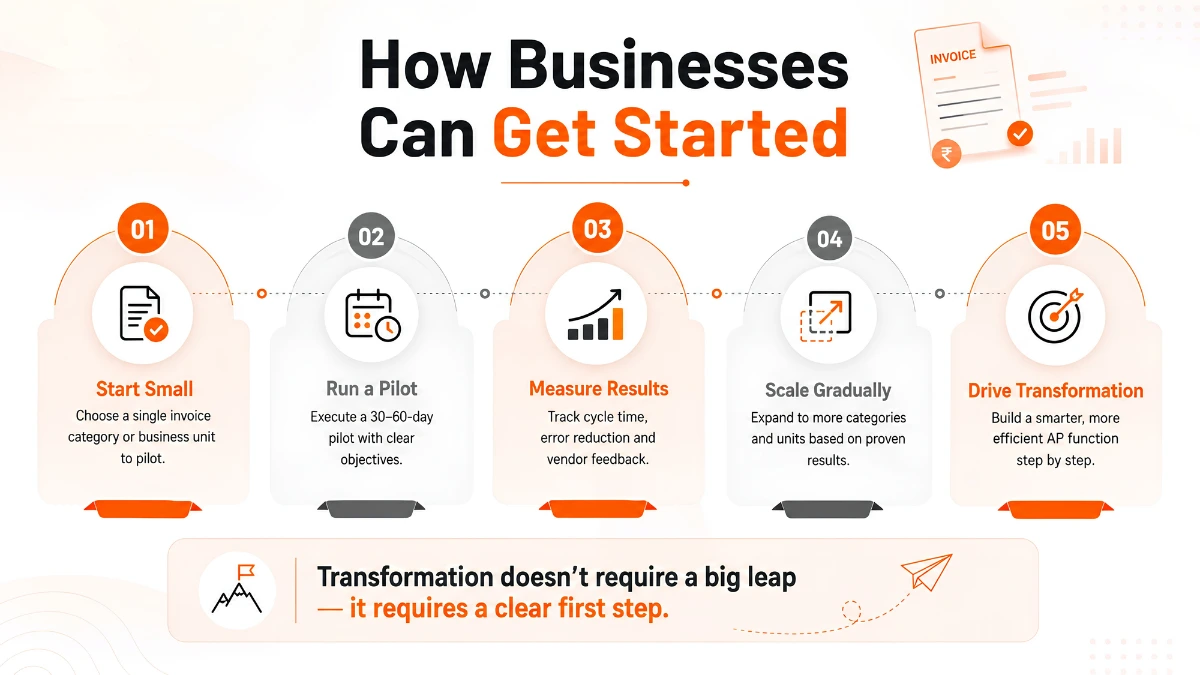
The smartest way to begin is not to automate everything at once. Start with a single invoice category or business unit. Run a 30–60-day pilot. Measure cycle time, error reduction and vendor feedback. Once the value is clear, scale gradually.
Transformation doesn’t require a big leap – it requires a clear first step.
Closing Thought
Accounts Payable may operate behind the scenes, but when it runs well, it strengthens everything – cashflow, compliance, vendor trust, and leadership focus.
Here’s a simple truth for business leaders: Stop treating AP as a routine back-office function and start viewing it as an operational backbone. Automation doesn’t remove control; it brings clarity. And clarity is what modern businesses need most.